Posts

Tenant Defenses to Eviction Notices in Florida

Image
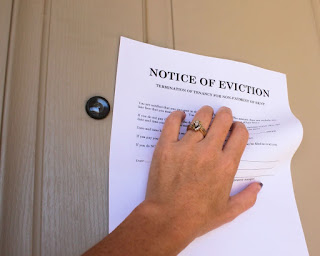
A collection of laws governs when and how a landlord will evict a tenant in each jurisdiction. Eviction is possible if a tenant fails to pay rent or breaks the contract or leasing arrangement. A tenant can have good reasons (legal grounds) to contest an eviction in certain cases. In this post, we will go into how and why an occupant in Florida may opt to fight an eviction. Evictions for Nonpayment of Rent In Florida, a landlord who evicts a resident for nonpayment of rent shall provide the occupant with a three-day notice to vacate for nonpayment of rent, or a notice of a common term. The occupant has three days to pay the rent or vacate the rental unit, according to this note. Contact  eviction lawyer Broward County   for more details. Does It Make Sense to Fight an Eviction? Fighting an eviction may be time and expense consuming, and it is only worthwhile if the occupant has a strong protection. If a tenant loses an eviction lawsuit, he or she might be responsible for the la...

Unlawful Detainer Action in Florida

Image
  Are you a property owner or a legal tenant with a relative, a child above 18 years, an ex-spouse, friend, ex-girlfriend, ex-boyfriend, or any person living on your property without paying rent and has no rental agreement or lease but won’t leave? Have you and that person's relationship broken, and you now ask them to leave, but they have refused? Or are you a homeowner with a squatter or an unwelcome individual who refuses to leave? If any of the above is true, you don't need an eviction or ejectment action. Unlawful detainer acts are governed by Chapter 82 of the Florida Statutes, which lays out landowners’ provisions to protect their rights in the property. An unlawful detainer action in Florida is a County Court litigation that does not include landlords, tenants, or leases such as lease agreements. It consists of a squatter or an anonymous person renting your land without paying rent or mortgage fees and refusing to leave when ordered to, despite having no legal clai...

Commercial and Residential Eviction Lawyers in Broward County

Image
  Based on an oral or written deal, you've leased out your factory, office, retail space, or other commercial property. The occupant broke the terms of the contract for one reason or another. You should now think about evicting the tenant. Residential and commercial evictions are clearly distinguished by Florida statute, with the latter being more complex and likely to result in protracted lawsuits. Refusing to pay rent or any costs owed under the contract is one of the most frequent reasons a homeowner can break the lease. Landlords must understand that evictions are not self-help measures, and they cannot evict their tenants without going through the court system. Evictions must be carried out in accordance with the rules of the jurisdiction in which the property is situated. Refusing to pay rent or any costs owed under the contract is one of the most frequent reasons a homeowner can break the lease. Changing the locks or modifying the property in some way without even going th...

The Cost of Eviction

Image
  Eviction is a tough process for the one doing the eviction and the one being evicted. During an eviction process, there are expenses that are incurred that include legal fees, court costs, lost rent, and maintenance fees. The costs incurred during an eviction process include; ●         Legal Fees:  Most times, you will need to hire an attorney to help you evict the tenant. This is so because the eviction process itself tends to be complicated and the paperwork required needs to be accurate. Even a typo can cause delays and other problems. Attorneys charge hundreds of dollars an hour and this could translate to a lot of money It is imperative to note that the more experience a lawyer has, the more the charges. ●         Court Costs:  All states charge filing fees, even though the costs may vary depending on the court. Tenants often dispute evictions. A disputed eviction that s being represented...

How Long is the Eviction Process

Image
  The eviction process in Florida can be completed in 2-3 weeks for uncontested evictions for failure to pay rent. In case the eviction is contested by the occupant or if the eviction is due to a reason other than nonpayment of rent, the eviction may take longer. Below are the steps of the eviction process Posting Of The Notice Tenants can file a complaint due to : ●         Failure to Pay Rent   ●         End of Lease Term/ No Lease  ●         Violation of the Rental Agreement   Filing The Complaint The landlord is required to file a complaint with the court of the applicable county. Upon notarization by the county clerk, the Complaint and summons are given to the county sheriff or process server to serve the specified tenant. Summons and Complaint is Served The tenant can decide to revert to the complaint, which must be written and filed...

Unlawful Detainer - Broward County Evictions

Image
Unlawful Detainer Unlawful detainer occurs when family members, friends, or other individuals are permitted to live in a property without payment or rent and then fail to leave. In such a case, there is no rental agreement or lease and also no landlord/tenant relationship. A good example of this is when a boyfriend and his girlfriend stay together in a house possessed by the girlfriend, and the boyfriend does not cover expenses on rent or other utilities. The boyfriend may refuse to leave the house even after a break-up. In order to force the boyfriend to leave the house, the girlfriend can obtain an unlawful detainer. What is an Ejectment An unlawful detainer is similar to an ejectment. This is because there is no landlord/tenant relationship or lease. However, in an ejectment case, the individual whom the owner of the property wants to leave claims to have the right to the property in some way. Difference Between Unlawful Detainer, Eviction, and Ejectment? The process of ev...

Rights And Duties of Tenants

Image
  Once a person has rented a mobile home, condominium apartment, or a house, they become tenants and are governed by Florida law. It does not matter that the landlord is a corporation or a private person. It also doesn’t matter whether you make your rent payments monthly, or weekly.  A tenant is entitled to several responsibilities and rights under Florida law. A tenant is entitled to privacy and a peaceful dwelling. Once they have rented the property, the unit is theirs to use  The landlord can only enter the premises to make repairs. The tenant is entitled to a working rental unit. The unit should have working locks on windows and doors, must be pet free, should be reasonably secure, the water heating system should be in good condition and working, the plumbing should be working fine. If the landlord claims that the tenant is in violation of rental agreements, they must inform the tenant of this in writing and allow the tenant time to correct the issue. If the issue...